The quick answer
Use this five-part loop
- Say the word clearly.
- Ask your child to spell it without seeing it.
- Check the answer together.
- Mark only the words that need another try.
- Return to those words later, not ten times in a row.
Home spelling practice
The most useful home spelling routine is short, specific, and easy to repeat: hear the word, attempt it without copying, check it, record the miss, and revisit that word after a gap. Ten calm minutes usually gives you better information than one long drill.
5–10 minutes
Use the school list
Focus on missed words
The quick answer
Before you begin
A school spelling list can look like one task, but it is really a mix of three different groups. Some words are already secure. Some are almost right but contain one uncertain letter pattern. A few are genuinely unfamiliar. Treating all three groups the same wastes time and can make practice feel harder than it is.
Start with one no-pressure attempt at every word. Do not teach during this first pass. Your job is to find out what your child can retrieve today. Put each word into one of three simple groups: known, shaky, or missed. The known words need only a light check later in the week. Shaky and missed words become the real practice list.
This first check is especially useful when a child says they “cannot spell any of them.” A list of fifteen words may contain only four real problems. Showing that difference turns an overwhelming task into something concrete.
The 10-minute routine
Say the word at a natural pace, then repeat it more slowly if needed. If two words sound similar, use the target word in a short sentence so meaning removes the ambiguity. Avoid stretching sounds so far that the pronunciation becomes misleading.
Ask your child to spell the word aloud, type it, or write it. The important part is retrieval: the correct spelling should not be visible during the attempt. Copying can help handwriting, but it does not tell you whether the spelling can be recalled.
Compare the attempt with the correct word and identify the smallest useful detail. Maybe the child omitted a silent letter, reversed an ending, or guessed the vowel in one syllable. Name that part instead of treating the entire word as wrong.
Hide the answer and try the word once more. If it is correct, move on. If it is still wrong, note the word for another day. Repeating it ten times immediately can create short-lived familiarity without proving the child will remember it later.
Do not make the session a parade of the hardest words. Add a few secure words between difficult ones. Small wins protect confidence and let you check that previously learned spellings remain available.
End after five to ten minutes, even if the list is unfinished. A child who can return tomorrow is in a better position than one who finishes every word tonight but dreads the next session.
Across the school week
Monday
Run the quick pre-test and separate known, shaky, and missed words.
Tuesday
Use the hear, attempt, check, and correct loop. Record the misses.
Wednesday
Practise the uncertain words and mix in a few easy wins.
Thursday
Test every word without hints, then review only the remaining gaps.
Test day
Review two or three difficult words. Do not introduce a new technique.
When a word will not stick
A repeated mistake usually contains information. Look at where the attempt changes from the correct word. If the child can spell the beginning but not the ending, practice the ending. If the sounds are clear but the letters are unexpected, make that surprising pattern visible. If the word is unfamiliar, explain its meaning and use it in a sentence before asking for another spelling attempt.
If frustration rises, pause. Correcting the emotional temperature is more important than completing the list. End with a word your child knows, then return later with a smaller goal.
Adjust the routine
Work with five to eight words at a time and keep practice close to five minutes. Say each word clearly and let your child repeat it before attempting the spelling. At this stage, tired attention can look like a spelling problem, so stop before accuracy drops. Use letter tiles, handwriting, or typing according to what keeps the word—not the activity—at the centre of the task.
Children in this range can usually manage ten to fifteen words in a short session. Invite them to mark their own shaky words and notice repeated patterns, such as uncertain vowel teams or suffixes. Giving them a small amount of control changes practice from something being done to them into a problem they can help solve. Keep the final mock test separate from the teaching sessions.
Older learners often benefit from understanding why a spelling looks the way it does. Discuss roots, prefixes, suffixes, syllables, and related words when those details clarify a difficult pattern. Avoid turning every word into a long language lesson; choose the explanation that resolves the actual error. Let the learner choose which remaining words deserve another round before the test.
Questions parents are searching
Ask your child to retrieve each spelling without looking, check the attempt straight away, and return to missed words after a gap. A five-to-ten-minute session repeated across several days is more useful than copying the full list or drilling every word equally in one sitting.
In Beezy, add the school list once—or scan the printed sheet—then use short games and smart review to keep missed words in the next practice round.
Use the school list, scrap paper, and a simple hear–spell–check loop. Give a quick pre-test, circle only the missed words, and test those again the next day. Letter tiles, homemade cards, and a parent-read mock test can add variety without costing anything.
Beezy is free to download and includes optional in-app purchases. Apple shows the current features and offer available to each family on the App Store.
Make the problem smaller. Identify the exact letter pattern, syllable, or ending that changes between the correct word and the attempt. Practise that detail, make one corrected attempt, and revisit the word later. If frustration rises, shorten the list and finish with a word your child can spell confidently.
Beezy can keep the routine consistent by reading words aloud, recording misses, and bringing difficult words back without making the parent rebuild a review list every night.
Try a no-look pre-test, syllable clapping, building words with letter tiles, finding the tricky letter pattern, spelling aloud, using the word in a sentence, and a short mock test. The activity is useful only if your child still has to recall the spelling rather than copy it.
For a screen-based option, Beezy turns the same school list into short spelling exercises and revisits mistaken words at spaced intervals.
Using Beezy for the routine
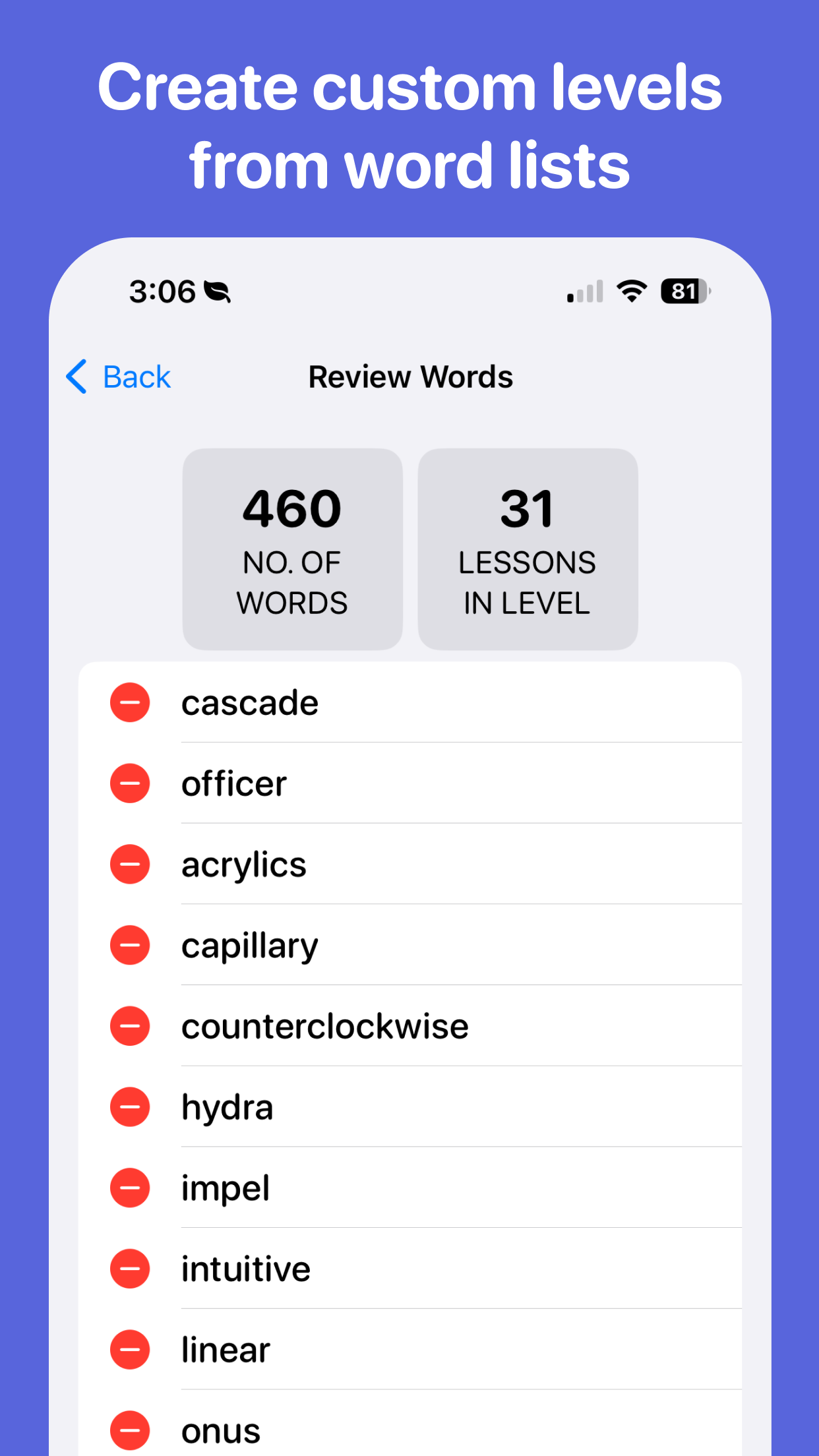
You can follow this routine with paper and a pencil. Beezy becomes useful when the repeated setup starts getting in the way. Create a custom level with the school words, or take a photo of the spelling sheet, crop it, and review the words Beezy extracts before saving the list.
During practice, Beezy reads the word aloud, offers short spelling exercises, records mistakes, and brings difficult words back through smart review. The progress screen separates mastered words from words still being worked on, so the next session has a clear focus. Families can use up to four learner profiles without mixing each child’s progress.
The app should support the routine, not replace your judgement. Check that a photographed list was captured correctly, keep sessions short, and stop if your child is no longer attending to the words.
Frequently asked questions
For most elementary-age children, five to ten focused minutes is enough for one session. Stop earlier if accuracy collapses or frustration rises. Consistency across several days matters more than finishing a long session.
All three can reveal recall. Use the format closest to the school test for a final practice, but vary the format during the week if it helps attention. The essential part is attempting the word without seeing the answer.
Start with the school list, then reduce the daily focus to the words that are shaky or missed. A child may attempt fifteen words on Monday but need focused practice on only four or five by Wednesday.
They can help when the child still has to retrieve the spelling and receives clear feedback. A game that only asks children to recognise or copy a word may feel busy without testing whether they can recall it independently.
Add one calm mock test late in the week. Use the same response format and avoid hints. This checks whether the spelling is available when the familiar practice cues are removed.
Download Beezy, add the school list once, and let clear audio, smart review, and visible progress carry the repetitive parts.