
Hear words clearly
Pronunciation support helps kids hear difficult words before spelling them, which matters more as words get less familiar.
Spelling bee confidence
Beezy helps kids practice harder words in a repeatable way. Over 6000 built-in words, clear pronunciations, smart review, and steady progress help families prepare without turning spelling bee prep into long, stressful sessions.
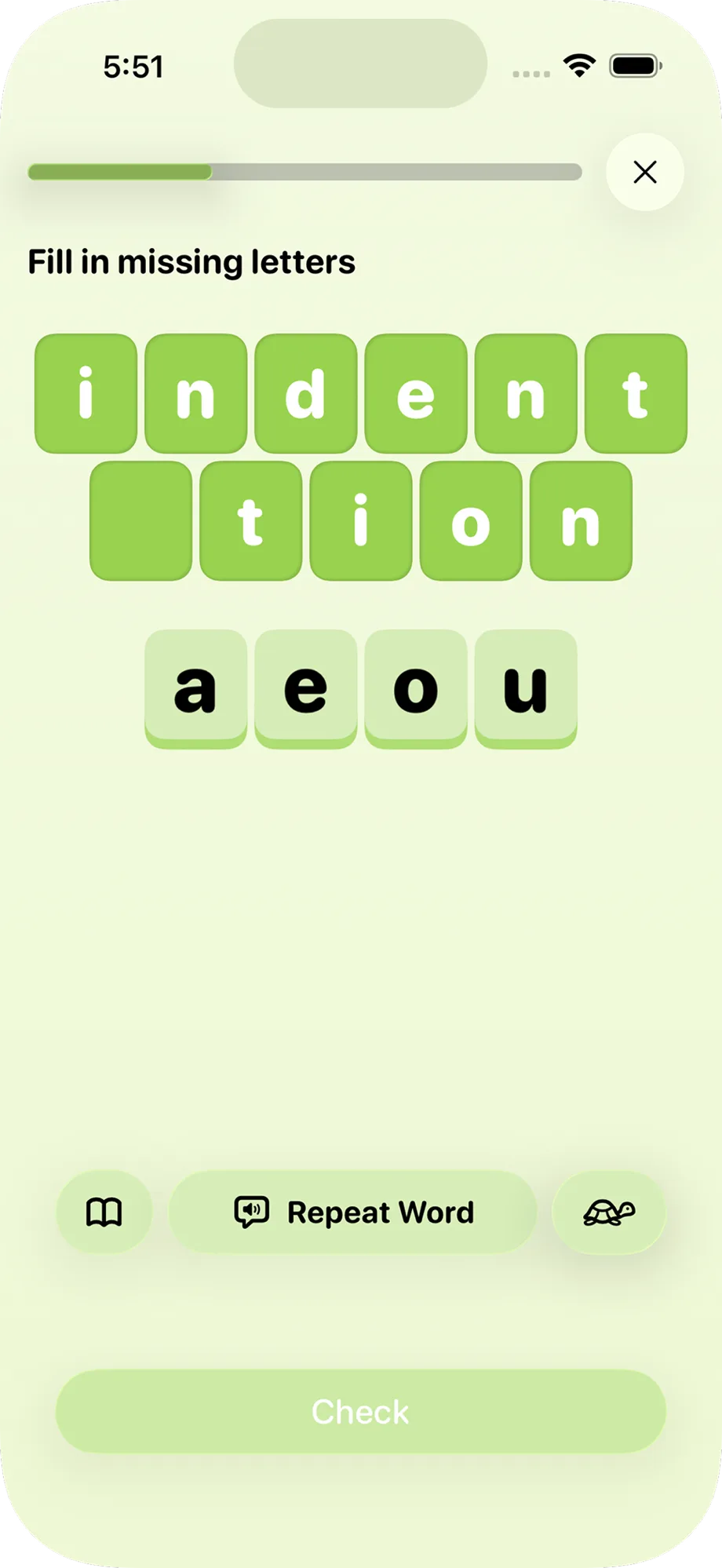
Pronunciation support helps kids hear difficult words before spelling them, which matters more as words get less familiar.
Smart review keeps harder words coming back so kids spend more time on the words they are most likely to miss.
Short practice sessions make spelling bee prep easier to sustain across the week instead of saving everything for one long session.
How to use Beezy for spelling bee prep
Use over 6000 built-in words with clear pronunciations or start from a list that matches the level your child is working toward.
Daily repetition works better than occasional long sessions, especially for harder words.
Pronunciation support helps kids hear the word clearly before trying to spell it from memory.
Smart review brings difficult words back so kids can build confidence through repeated success.
Why it helps
Families often know they should practice, but not how to keep the routine going. Beezy helps by turning spelling bee prep into something small enough to repeat and structured enough to make progress visible.
Pronunciation support for hearing unfamiliar words
Smart review for words that need more repetition
Short sessions that are easier to sustain
Progress tracking that helps kids see improvement
Weekly spelling tests and spelling bee competitions look similar on the surface — both involve spelling words correctly — but they require different preparation strategies. Understanding the difference helps families practise more effectively.
Bee preparation requires daily repetition over a longer window, attention to pronunciation above all else, and practice spelling out loud — not just recognising words on a screen. Beezy's short sessions, audio pronunciation, and smart review are specifically useful for this kind of sustained preparation.
Most families underestimate how much lead time a spelling bee requires. Starting early and keeping sessions short is consistently more effective than intensive cramming in the final days.
Start with grade-level words your child already partially knows. Short daily sessions — 10 to 15 minutes — build the habit before the difficulty ramps up. Focus on words your child almost knows: these respond fastest to practice.
Move to words with unusual patterns — silent letters, double consonants, uncommon endings. Pronunciation is critical here. Beezy's smart review will start surfacing the words your child keeps missing so practice time concentrates where it matters.
Have your child spell words aloud, standing up, the way they will on competition day. The gap between knowing a word privately and spelling it correctly under pressure is real. Practising the performance matters as much as knowing the words.
Cut session length and stick to words already in good shape. Cramming new words at the end rarely works and often increases anxiety. Review your child's strongest words to build confidence going in.
Ten to fifteen minutes daily is more effective than occasional long sessions. Short, consistent practice leads to better long-term retention than one or two intensive study sessions per week. The goal is to make practice a daily habit, not an event.
Six to eight weeks gives most students enough time to build a solid word base, work through harder vocabulary, and practice the performance side of spelling out loud. Starting two weeks out almost always feels rushed. Earlier is almost always better.
Weekly spelling tests cover a short, predictable list — preparation is compact. Spelling bee preparation covers a much larger and less predictable word pool over weeks. It also requires spelling words aloud under pressure, which is a different skill from writing words on paper. Both pronunciation and oral performance need specific practice for a bee.
Keep sessions short and stop before frustration peaks. Missing a word is part of the process — the goal of smart review is to bring those words back in a low-stakes way until they feel manageable. Framing missed words as "words the app will help us work on" rather than mistakes makes a meaningful difference in how kids respond to the routine.
It depends on the competition level. For a classroom or school-level bee, your school's assigned word list is usually the right starting point. For regional or national competition, the official Scripps School Spelling Bee Study List and Words of the Champions are the standard references. Beezy's custom list feature supports any word list you want to practise.
Helpful next steps