Quick version
Start small and repeat
Gather likely words, group them by pattern, practice for 10 to 15 minutes a day, and revisit misses every few days instead of saving everything for one long session.
School spelling bee guide
The goal is not to cram as many words as possible. The most effective approach is a short, repeatable plan that builds pronunciation, pattern recognition, and confidence over time.
Short daily practice
Pattern-based review
Mock rounds each week
Quick version
Gather likely words, group them by pattern, practice for 10 to 15 minutes a day, and revisit misses every few days instead of saving everything for one long session.
Use school lists, classroom materials, and grade-level word resources to build a realistic starting set.
Sort words by sound, endings, prefixes, or spelling families so the child learns patterns instead of isolated words.
Keep sessions short and repeatable so progress keeps building through the week.
Step-by-step plan
Pick a realistic batch of words from school materials and grade-based spelling bee resources instead of trying to cover everything at once.
Short daily blocks usually work better than occasional long sessions because they are easier to repeat.
Pronunciation matters. Hearing the word clearly helps children connect sound to spelling before they try to spell from memory.
Difficult words should come back regularly so mistakes turn into familiar targets instead of repeated surprises.
Word-list strategy
Start with the official word list from the school, teacher, or organiser. That list is the closest evidence of what the child may hear, so it should receive most of the practice time. If the organiser also names a study source or grade range, use that before downloading a huge general list from the internet.
Divide the official words into small batches rather than working from top to bottom every night. Keep five to ten new words together, then mix in words that were missed earlier. Once a batch is mostly secure, add the next group without dropping every previous word at once. A short mixed review shows whether a spelling is still available after the immediate practice cue has disappeared.
Extra words are useful only after the official list is under control. Choose them by pattern: shared prefixes, suffixes, roots, silent letters, or vowel combinations. This gives the child a reason for meeting each additional word and helps a learned pattern transfer to an unfamiliar competition word.
Four-week plan
Run a gentle first attempt, separate secure and missed words, and settle on a repeatable ten-minute practice time. The goal is not to finish the list; it is to understand the starting point and make the next session easy to begin.
Group related words, discuss meanings, and notice the letters that do not follow the most obvious sound. Continue adding small batches while bringing missed words back after a day or two.
Have the child stand, listen, repeat the word, ask an allowed question, spell clearly, and say the word again. Keep the round short and treat mistakes as information for the next review list.
Prioritise the remaining shaky words, run a few calm mock rounds, and avoid a last-minute flood of difficult vocabulary. Finish the final practice with familiar words and normal sleep rather than a long cram session.
Mock spelling bees
A child may know a spelling at the kitchen table and still rush when standing in front of other people. A mock round removes some of that novelty. Use the same sequence every time: say the word naturally, let the child repeat it, answer requests that the real rules permit, and wait while they spell without hints.
Teach a short pause before the first letter. During that pause, the child can repeat the word, think about syllables and meaning, and decide whether a question would help. The aim is not to slow every answer dramatically; it is to interrupt the reflex to begin spelling before the word has been fully heard.
Keep correction separate from the mock round. Note a missed word, complete the small round, then examine what changed: a doubled consonant, an unstressed vowel, an ending, or an unfamiliar root. The next practice session can target that pattern without turning the mock bee into a public lesson after every answer.
Common mistakes
Helpful reminder
Children tend to do better when practice feels steady and familiar. A calm routine with repeated exposure is usually more useful than intense last-minute preparation.
Questions families are searching
Begin with the official school or organiser list, practise a small batch every day, and keep a separate list of missed words. Combine hearing, saying, writing, and spelling aloud, then add short mock rounds so the competition format stops feeling unfamiliar.
Beezy can hold the school list, pronounce each word, and revisit mistakes between parent-led mock rounds. Its role is to make the repeatable daily practice easier; the official list and competition rules still come from the organiser.
There is no single trick that replaces preparation. The most useful competition habit is to slow down: listen to the full word, repeat it, ask for meaning or a sentence when the rules allow, notice the word's sounds and parts, then spell clearly. During study, group words by roots, prefixes, suffixes, and recurring letter patterns so unfamiliar words are not just random strings.
A useful mixed practice set is below. It is not an official competition list, so start with the words provided by the school and use these only for additional pattern practice.
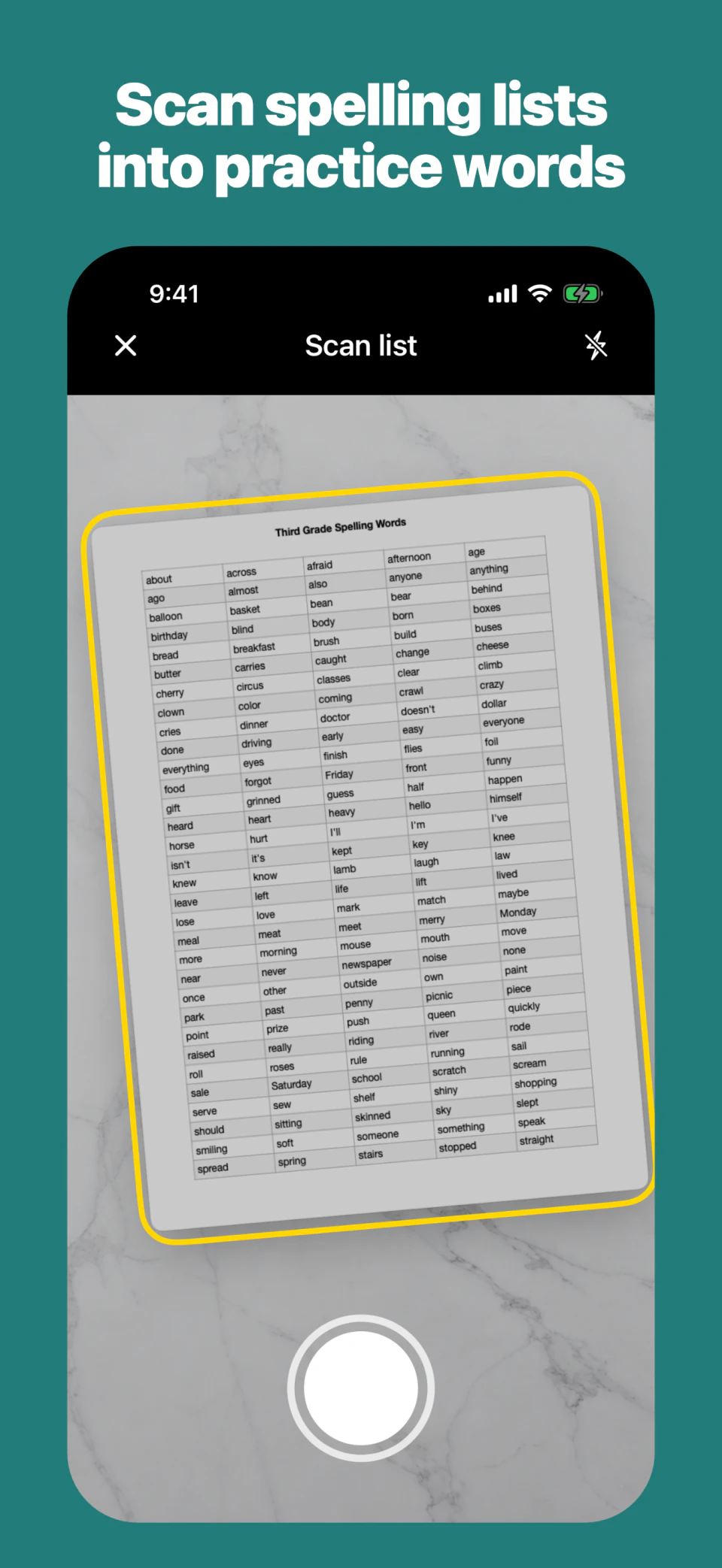
Add the words to Beezy as a custom level, or scan a printed list, then let the first practice round reveal which spellings deserve repeated review.
Use five-to-ten-minute sessions and a small batch of age-appropriate words. Say each word clearly, let your child repeat it, and ask for one spelling attempt before giving feedback. Mix difficult words with easy wins and finish before attention drops. One playful mock round each week is enough to make the format familiar without making every session feel like a test.
Beezy is rated 4+ and can provide short audio-led practice, but a parent should still check the captured word list, choose an appropriate difficulty, and stop when the child is tired or frustrated.
Where to start
Start with an age-appropriate set of spelling bee words.
Use a more advanced list for students who need the next step up.
Practice harder words with the same structured routine.
Using the official list in Beezy
When the list is printed, Beezy can reduce the setup work. Photograph the page, crop it to the relevant words, and review every recognized spelling before saving. That review matters: the practice set should match the teacher’s list exactly, including accents, variants, and words that look similar on the page.
The child can then hear the words, complete short spelling exercises, and revisit mistakes through smart review. Use the app for frequent low-pressure sessions, then keep at least one parent-led mock round in the week so the child also practises the spoken competition sequence and any questions allowed by the organiser.
See how scanning a spelling list worksOnce you have a word set, Beezy can turn it into short daily practice using built-in words, clear pronunciations, and custom lists when you need exact school words.